In the field of ductile iron pipe fittings, asphalt coating, polyurethane/polyethylene (PU/PE) coating and fusion bonded epoxy powder (FBE) coating are three representative anti-corrosion technologies, which are suitable for different environments and working conditions.
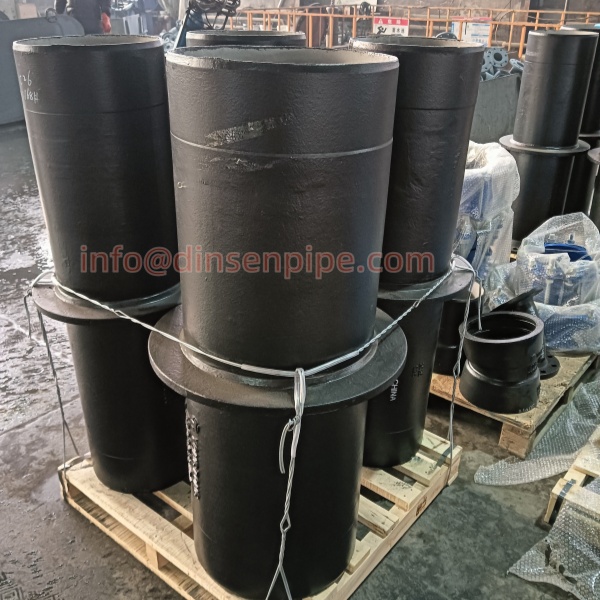
1. Zinc-rich primer, asphalt paint finish + cement lining
The outer coating is applied by hand-brushing or spraying on the exterior of the pipe, while the cement lining is applied by hand-applying cement mortar to the interior of the pipe.
Advantages:
- Economical: Low raw material costs, mature technology, and competitive overall construction costs.
- Flexibility: Adapts to minor pipe deformation and settlement, resists cracking.
- Chemical Resistance: Strongly resistant to common soil microorganisms and weak electrolytes.
Disadvantages:
- Poor environmental friendliness: Harmful gases may be released during production and construction, making it difficult to meet increasingly stringent environmental standards.
- Low mechanical strength: Susceptible to scratches during transportation and installation.
- Poor temperature adaptability: Brittle at low temperatures, softening and flowing at high temperatures, and performance significantly affected by temperature.
Purpose of epoxy coated ductile iron fittings:
Mainly protects the inner wall of the pipe, preventing corrosion of the ductile iron substrate by the transported water, and helps maintain stable water quality.
Applications:
Suitable for municipal water systems with low environmental requirements and low corrosive potential (such as neutral soil environments), it is one of the most cost-effective options on the market.
2. Polyurethane/Polyethylene (PU/PE) Coating
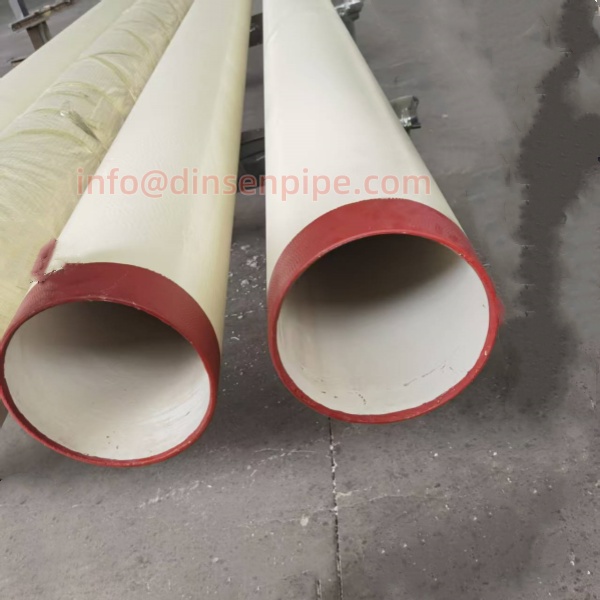
This coating offers excellent corrosion resistance and is resistant to acids and alkalis.
Advantages:
- Excellent overall performance: Combines excellent mechanical properties (wear and impact resistance) with chemical stability (acid, alkali, and salt spray resistance), and excellent insulation properties.
- Strong adhesion: The epoxy primer ensures a strong bond between the coating and the substrate, effectively preventing media penetration.
- Adaptable: Able to withstand the mechanical stresses of transportation and backfilling, suitable for a variety of harsh soil environments, including gravel areas.
Disadvantages:
- Higher cost: The raw materials and complex production process result in an overall cost higher than asphalt coating.
- Difficult to repair: Once damaged, on-site repair is complex and requires specialized materials and tools.
3. Fusion Bonded Epoxy (FBE) Coating
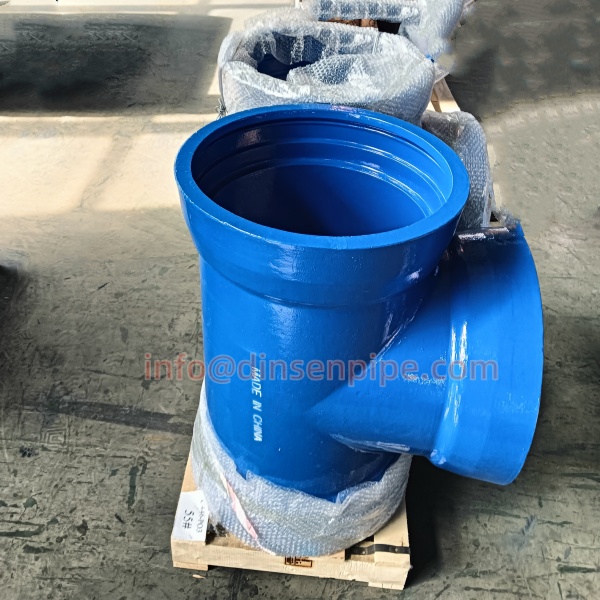
FBE powder coating forms a thin, hard protective layer through electrostatic spraying and high-temperature curing, renowned for its excellent adhesion and chemical inertness. During application, the pipe is first shot-blasted to remove rust and preheated to approximately 230°C. The epoxy powder ductile iron fittings then electrostatically adheres to the hot surface, melting, leveling, and rapidly curing into a continuous, dense film.
Advantages:
- Extremely strong adhesion: Forms a chemical bond with the steel substrate, providing a strong bond and excellent resistance to cathodic disbonding.
- Excellent chemical resistance: Excellent resistance to most acids, alkalis, salts, solvents, and seawater.
- Thin yet tough: Typically 300–500 μm thick, it features a smooth surface and a low coefficient of friction, making it easy to apply and install.
- Environmentally friendly and safe: Composed of 100% solids and free of volatile organic compounds (VOCs), it is environmentally friendly during production and application.
Disadvantages:
- Weak impact resistance: The thin hard coating is susceptible to damage from impact with sharp objects.
- Poor UV resistance: Susceptible to chalking and aging after prolonged exposure to sunlight, making it unsuitable for above-ground exposed pipes.
- Highly demanding process requirements: Stringent requirements are placed on the substrate surface preparation and application process; any imperfections may result in coating defects.
In drinking water transportation applications, asphalt coatings must meet relevant hygiene standards, and their coating thickness is generally not less than 70μm, and locally not less than 50μm; while the typical thickness of FBE coatings is above 250μm.
epoxy coated ductile iron fittings, Coating Options for DI Fittinittigs, Ductile iron fng with PU coating, FBE coating ductile iron fitting, ductile iron pipe fitting, EN545 fitting coating ,fbe powder coating
Post time: Oct-10-2025