In industrial piping systems, gate valves are widely used shut-off valves, favored by engineers for their low fluid resistance and unrestricted media flow. However, many purchasing and installation personnel often face a core dilemma when selecting a gate valve: what are the differences between rising and falling stem gate valves? And how should they be chosen in practical applications?
1. Non-Rising Stem Resilient Seated Gate Valve: Stem Movement Visible
The stem nut of a rising stem gate valve is usually designed on the valve cover or bracket. When the handwheel is turned, the stem moves up and down by rotating the stem nut. Simply put, the handwheel remains stationary, and the stem moves up and down along with the gate. Therefore, during opening, the stem gradually extends from above the handwheel, which is visually very obvious.
2. Rising Stem Resilient Seated Gate Valve: Stem Rotation Not Visible
The stem nut of a falling stem gate valve is located inside the gate and is in direct contact with the flowing medium. When the handwheel is turned, the handwheel and stem are connected and relatively stationary, and the stem only rotates in place. The gate moves up and down on the stem using a threaded drive. Because the valve stem itself does not rise or fall, the valve’s height always appears constant from the outside.
How to Select the Right Type?
Scenarios Recommended for Rising Stem Resilient Seated Gate Valve:
- Pipelines on the ground or in pipe racks where space is ample.
- The medium is pure water, oil, or gas with low corrosiveness to the valve stem.
- Situations requiring frequent operation where operators need to visually confirm the valve’s status.
- The food and pharmaceutical industries where high valve maintenance is required.
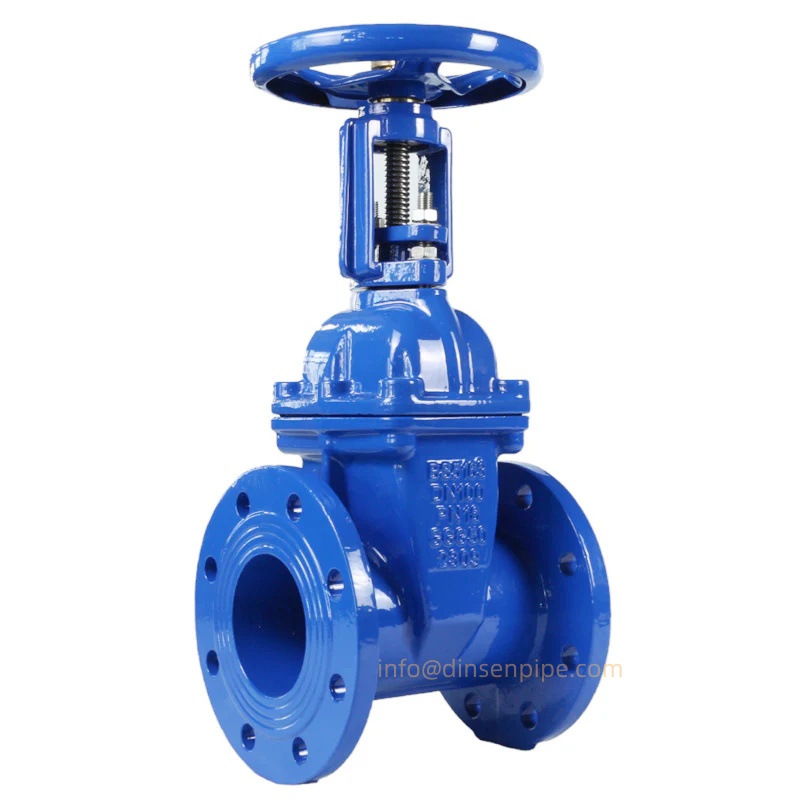
Scenarios Recommended for Non-Rising Stem Resilient Seated Gate Valve:
- Buried pipelines or underground valve wells where overhead space is limited.
- Installed in indoor ceilings or equipment compartments.
- The medium is high-viscosity or contains solid particles, but these particles will not accumulate in large quantities (a trade-off needs to be made).
- Shipbuilding or high-rise buildings where there are strict restrictions on the overall height of the valve.
Rising stem and non-rising stem gate valves, as “guardians” of piping systems, each have their irreplaceable applications. Understanding their structural differences and working principles helps us make more economical and reliable choices during design and procurement. Rising stem gate valves have gained widespread market adoption due to their intuitiveness and reliability, while non-rising stem gate valves have shone brightly in specific fields due to their unique space-saving advantage.
Post time: Mar-17-2026