In the design and manufacture of flexible joints, the allowable deflection angle should be no less than:
DN40~DN300: 3.5°
DN350~DN600: 2.5°
DN700~DN2000: 1.5°
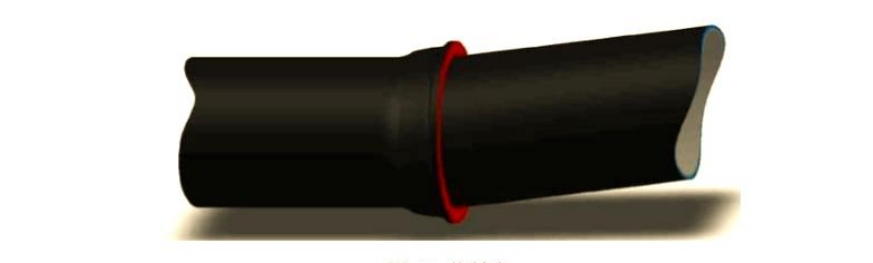
All joints must be designed to allow for perfect axial movement and allow for extraction.
The flexible joint technology for ductile iron pipes acts like a layer of “elastic armor” for the pipe. It primarily consists of a rubber ring seal and a movable connection structure.
The rubber ring is a key component of the flexible joint. It possesses excellent elasticity and sealing properties. When the pipe is subjected to external forces caused by earthquakes or subsidence, the rubber ring deforms elastically, absorbing and buffering the energy and preventing leaks at the pipe joint.
Furthermore, the rubber ring can adapt to a certain degree of angular change and displacement, ensuring the pipe remains functional even in complex geological conditions.
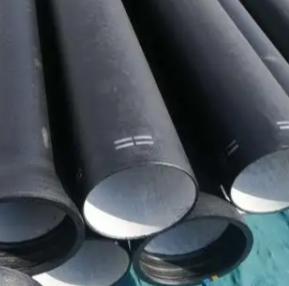
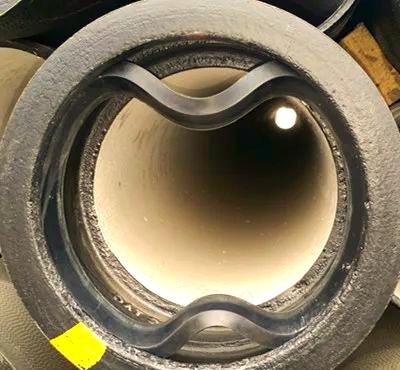
Socket with rubber ring DI pipe socket
The flexible socket-and-spigot joint structure gives ductile iron pipes greater flexibility. It allows the pipes to move and rotate relative to each other within a certain range, much like the flexibility of human joints. During earthquakes, the pipes can adjust accordingly with the shaking of the ground, preventing fractures caused by rigid connections. For example, in earthquake-prone areas, ductile iron pipes with flexible joint technology can remain in good working order after an earthquake, significantly reducing losses caused by pipeline damage.
flexible socket-and-spigot joint ,DI pipe socket,Socket with rubber ring , ductile iron pipes
Post time: Oct-15-2025