Ductile iron pipes, due to their high strength, toughness, and corrosion resistance, have become the workhorse of fluid transportation in numerous fields, including municipal water supply, industrial water distribution, and fire protection systems. The key to connecting these pipes into a reliable network often lies in a seemingly insignificant yet crucial component: the rubber gasket at the flange interface.
Many DI pipe buyers understand the importance of selecting high-quality EN598 ductile iron pipes, but they often overlook the details of the joint sealing system. In fact, the pressure-bearing capacity of a flange interface depends not only on the wall thickness or material of the steel pipe itself, but also on the quality of the rubber gasket and the number of bolts securing it, which together constitute the final and most critical line of defense for safe pipeline operation.
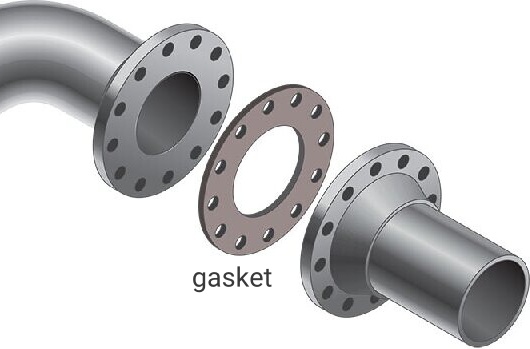
First, let’s understand the rubber gasket used in flange joints. It’s compressed between two flanges and its core mission is:
- Effective sealing: Under the action of bolt preload, it elastically deforms, filling microscopic irregularities in the flange sealing surface and preventing leakage of internal fluids (water, gas, etc.).
- Compensating for deviation: Absorbing minor angular deviations and offsets caused by installation or foundation settlement, ensuring a reliable seal.
- Damping and vibration reduction: It provides a certain degree of vibration and noise reduction, mitigating the impact of water hammer or pressure fluctuations on the piping system.
- High-quality rubber gaskets are typically made of materials such as EPDM or NBR. They offer excellent weather resistance, water resistance, and compression resilience, ensuring long-term stable performance under harsh operating conditions.
Why do more bolts increase pressure resistance?
- Creating a uniform and sufficient sealing pressure. A greater number of bolts creates a denser and more evenly distributed compression force on the flange ring, thereby resisting higher internal pressures and preventing localized gasket failure and leakage caused by uneven pressure.
- Flange rigidity and bending resistance. More bolts provide a denser “support point” for the flange, significantly enhancing its overall rigidity and bending resistance. This ensures uniform compression of the gasket across the entire sealing surface, maintaining a seal even under high pressure.
- Designs strictly adhere to international standards such as ISO 2531 and EN 545. These standards clearly specify the number of bolt holes and bolt specifications for different pipe diameters (DN) and pressure ratings (PN). For example, a DN100 PN10 flange might have four bolts. A DN100 PN16 flange might have eight bolts. A DN300 PN16 flange might require 12 or even 16 bolts.
Higher operating pressure ratings require a greater number of bolts to ensure a secure connection.
We hope this article provides valuable insights for you and your team. If you have more specific product selection or technical questions, please feel free to contact DINSEN. Our professional technical team will be happy to provide you with support.
Post time: Sep-17-2025