
The principle of thermal zinc spraying can be summarized as follows: first, high-pressure air and pipes are used to blow sand particles onto the surface of the workpiece to remove rust and oxide scale on the metal surface, while the surface is numb to increase the adsorption capacity of the thermal spray coating. Then, oxygen, acetylene or electric heat source (electric heating is used for large workpieces, oxygen and acetylene heating is used for small and medium-sized workpieces) is used through compressed air and special tools (spray guns) to spray zinc atomized at ultra-high speed onto the metal surface.
Galvanizing Advantages
1. Cold galvanizing uses pickling and phosphating as pretreatment, leaving acid and alkali residue on the workpiece surface, creating a corrosion risk and making the cold-dip zinc coating susceptible to detachment. The zinc spraying process uses sandblasting as pretreatment, resulting in a very clean and rough workpiece surface. This prevents corrosion from the inside out and zinc detachment after zinc spraying.
2. Hot-dip galvanizing requires a specific temperature of approximately 440°C, which can cause deformation in the workpiece. However, the zinc spraying process uses a very low temperature, below 80°C, preventing deformation. 3. Cold- and hot-dip galvanizing processes limit workpieces to the length, width, and height of the galvanizing tank, while zinc spraying processes are not.
4. Both cold- and hot-dip galvanizing processes also present the challenge of on-site repair. Damage to welds during on-site installation, loading and unloading, or transportation can only be repaired with paint. With zinc spraying, on-site repairs can be performed using zinc spraying, avoiding process bottlenecks.
5. Because cold-dip galvanizing uses pickling and phosphating as pretreatment, the workpiece surface is rough and the coating adhesion is poor. In contrast, zinc spraying uses sandblasting as pretreatment, resulting in roughness and better coating adhesion, with a tensile strength of ≥6 MPa.
6. Cold-dip galvanizing is highly polluting to water and poses significant environmental concerns, while hot-dip galvanizing poses minimal environmental impact. Therefore, hot-dip galvanizing will become increasingly popular for corrosion protection of steel structures.
Hot-spray Zinc Process
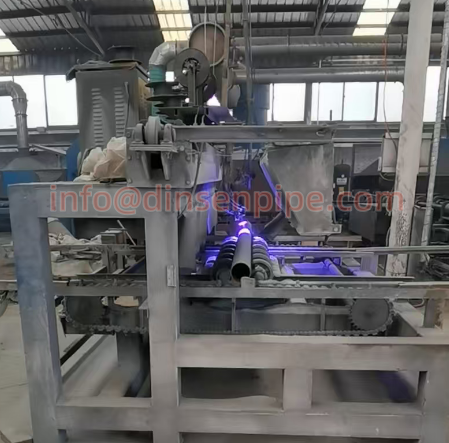
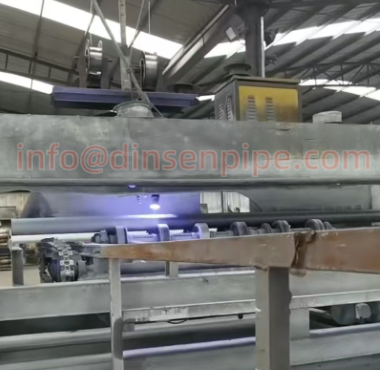
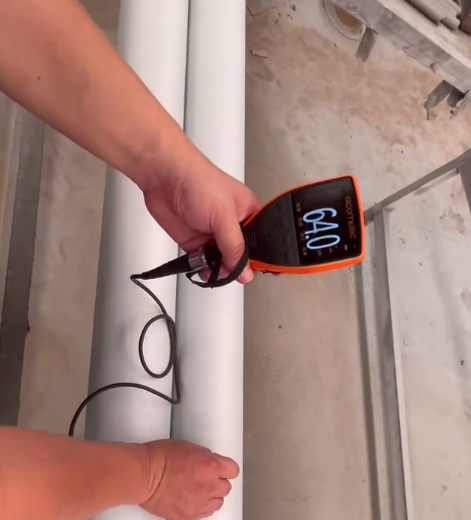
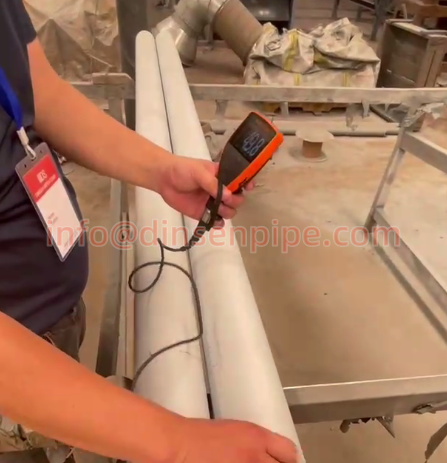
The entire construction process of hot-spray zinc anti-corrosion is divided into four steps: surface treatment → zinc spraying → sealing treatment → quality inspection
Surface Treatment
Because the quality of surface treatment directly affects the quality and longevity of the coating, proper pretreatment of the base surface is essential. Sandblast the base surface to remove rust according to process requirements. Rust removal standards adhere to the Sa3 standard in the “Rust Grades and Rust Removal Grades for Steel Surfaces Before Painting” (GB8923-88). This standard specifies the following quality requirements: Thoroughly sandblast to remove scale, grease, rust, dirt, paint, and other attachments. The surface should exhibit a uniform metallic luster. After sandblasting, clean the surface with clean, dry compressed air or a clean brush. The Sa3 standard in the “Rust Grades and Rust Removal Grades for Steel Surfaces Before Painting” (GB8923-88) should also be considered.
Sandblasting
During the application process, the following equipment and measures are used: an air compressor, air tank, oil-water separator, air filter, sandblasting pot, adhesive tape, sandblasting gun, and wear-resistant porcelain nozzle. The abrasive is high-hardness, angular river sand (0.5-2mm). The sand should be dry, with a moisture content of less than 1%, and clean and free of impurities. The nozzle uses an expanding L-shaped porcelain nozzle. Through the expansion-compression-expansion phase, the air flow out of the sandblasting nozzle reaches supersonic speeds, significantly increasing the kinetic energy of the abrasive, further activating and electrifying the substrate surface, thereby increasing the bonding strength of the coating. The rust removal process involves compressed air entering the air tank, passing through the oil-water separator and air filter to make it clean, dry, and oil-free, before entering the sandblasting pot. The adhesive tape presses the sand into the sandblasting gun and blasts it onto the metal substrate. Using these equipment and conditions, the surface treatment can meet Sa3 standards, with a surface roughness of 40-60µm. At this point, the electrode potential, activation level, and coating adhesion of the metal surface have all reached optimal parameters.
Zinc Spraying
Zinc spraying should be completed within 2-3 hours of sandblasting. This is because the electrode potential of the substrate surface after sandblasting is significantly different from that before treatment, causing it to reach its minimum potential. At this point, the substrate’s surface activation reaches its maximum value, and the bonding strength between the substrate and the coating is at its highest. The electrode potential on the substrate surface remains essentially stable for 2-3 hours. Over time, the surface electrode potential begins to increase, the activation strength weakens, and the bonding strength between the coating and the substrate decreases. This is due to the thickness of the surface oxide film. Within 2-3 hours, the thin oxide film is easily broken by the high-speed spraying particles when they impact the surface. After 2-3 hours, the oxide film acts as a barrier between the coating and the substrate, disrupting the adhesion between the coating and the substrate. The spraying equipment uses a domestically produced spray gun (typically a Zhonglian air handheld spray gun from the Shanghai Spraying Machinery Factory). The zinc material used is high-quality, oil-free zinc wire with a diameter of 3 mm and a zinc content of at least 99.5%-99.7%.
Post time: Sep-05-2025